Climate and Energy Data Collaboration Risk & Resilience
Climate and Energy
The regular ports and associate members of IAPH have been developing tools to help ports deal with emissions since the 2007 Resolution on Clean Air Programs for Ports which was declared at the IAPH World Ports Conference in Houston, U.S.A. Since then it’s active committees have developed multiple tools to help ports develop clean air programs, in collaboration with industry partners, governments and regulators. The current suite of tools support ports in preparing themselves for a multi-fuel future.
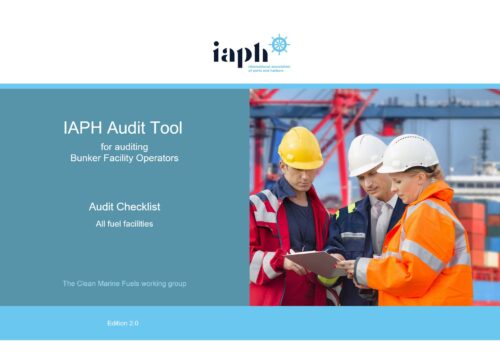
・IAPH Audit Tool for auditing Bunker Facility Operators
Comprising the tool itself, a guidance document, an intake form and license, this serves to assess the compatibility of a candidate bunker operator’s safety management system by ports and competent authorities. The essence of the tool is that ports may use this to ensure the quality of bunker operators and hence safe bunker operations in the port.
IAPH members: Free Please click here.
IAPH non-members: Price EUR 500.00 Please click here for the IAPH online store.
|
|
|
|
|
|
IAPH Audit Tool Edition 2.0 |
IAT Guidance Edition 2.0 |
IAT Intake Form Edition 2.0 |
IAT License Edition 2.0 |
・Clean Marine Fuels Ready Terminal Tool
This tool is intended to support terminal operators in achieving the required level of preparedness and readiness to safely and efficiently handle clean marine-fuelled vessels at their berths. As part of this tool, the guidance document and its supporting appendices have been prepared by the IAPH Clean Marine Fuels Working Group which consists of two other key documents:
A Terminal Self-Assessment Checklist for terminal operators to prepare for, and demonstrate, readiness to systematically handle clean marine-fuelled vessels.
An Authority Verification Form – for port or competent authorities to review the terminal’s assessment and to verify activities and modifications undertaken to achieve and ensure readiness.
 |
 |
 |
 |
| CMF Ready Terminal Tool Guidance | A Terminal Self-Assessment Checklist | An Authority Verification Form | CMF Ready Terminal Tool User License |
IAPH members: Free Please click here.
IAPH non-members: Price EUR 500.00 Please click here for the IAPH online store.
・IAPH Clean Marine Fuels Working Group Bunker Checklists
These bunkering checklists originated from ones developed over 12 years ago by this group with the large scale adoption of LNG. Since then, the checklists, which cover all interfaces (truck to ship, ship to ship) have been revised several times following industry-wide use and broadened to cover all fuels.
These include operational bunkering checklists for liquid gases (including liquid hydrogen and liquefied biogas as well as liquid methane, i.e. LNG), alcohol-based fuels including methanol, bio-methanol, e-methanol, ethanol and bio-ethanol and the first ammonia bunkering checklist, which has recently been developed as part of a new series for refrigerated toxic gases.
[Alcohol-based Series]
Ship to Ship (Types A, B and C)
|
|
|
|
Truck to Ship (Types A, B, M and T)
|
|
|
|
|
[Liquified Gas Series]
Ship to Ship (Types A, B and C)
|
|
|
|
Truck to Ship (Type A, B, M and T)
|
|
|
|
|
[Refrigerated Toxic Gas Series]
Ship to Ship
 |
Terminal Call Checklist (all fuels)
This IAPH Terminal Call checklist has been developed specifically for terminal or site operators to manage operations involving marine-fuelled vessels of all types carrying alternative clean marine fuels. These fuels are often flammable and toxic liquids or gases, intended for use in propulsion or auxiliary engines, with or without bunkering operations while alongside.
The checklist aims to ensure that a clean marine-fuelled vessel’s fuel system does not pose extra risks for the terminal and its operations, and that the vessel can be safely accommodated. It provides the terminal with advanced information regarding potential restrictions for both vessel and terminal operations.
If bunkering operations are planned, parties involved should use the IAPH bunker checklists along with this terminal call checklist.
IAPH members: Free Please click here.
IAPH non-members: Price EUR 250.00 Please click here for the IAPH online store.
・Port Readiness Level for Marine Fuels
The Port Readiness Level for Marine Fuels (PRL-MF) is a self-assessment tool used by stakeholders in any type of port community to identify the port’s current ability to bunker vessels for individual low emission fuels and outlines the steps it would need to take to achieve its intended ability in the future. This fuel-agnostic tool provides a structured approach to assessing, developing, and implementing alternative fuels.
The PRL-MF can be used for any fuel and within any port configuration. Shipping lines, bunker suppliers and others can also benefit from using this self-assessment and communication tool as it spans multiple stakeholder groups.
To download the PDF of this tool in English, please click here.
To download the PDF of this tool in French, please click here.
To download the PDF of this tool in Spanish, please click here.
An online version of the Port Readiness Level for Marine Fuels (PRL-MF) has been developed in partnership with Mission Innovation which requires registration.
The link to the PRL-MF portal can be found here.
・MTBS study commissioned by IAPH on Investment Requirements of Developing Countries for Port Decarbonisation and Adaptation to Climate Change
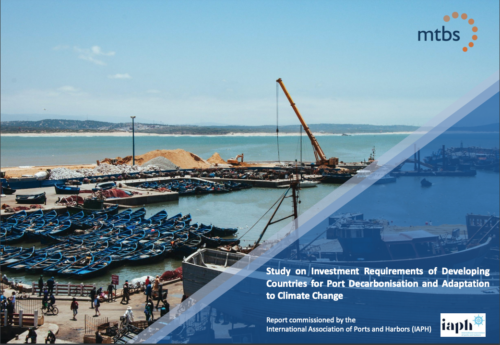
Developing countries face significant investment gaps in terms of the transition to energy-efficient and climate-resilient port infrastructure. This study, commissioned by IAPH, is intended as a comprehensive analysis of these investment gaps, focusing on infrastructure aimed at reducing emissions and bolstering resilience against the impacts of climate change.
This study explores the current state of port infrastructure in developing countries, identifies key areas where investments are most needed, and suggests actionable recommendations aimed at bridging these investment gaps.
The link to the MTBS study can be found here.
・The IAPH Environmental Ship Index Whitepaper
The IAPH Environmental Ship Index (ESI) is a voluntary system designed and used by ports to incentivise ship owners to improve the environmental performance of their vessels. Recognised by the IMO as the standard basis for port incentives for shipping, ESI’s aim is to incentivise the ongoing improvement of shipping’s environmental performance by means of an automated, maintainable and evolving environmental-scoring system for ships.
This whitepaper explains in simple terms how ESI works, the role of the incentive providers (ports) and receivers (ship owners) with illustrative case studies and testimonials of ports who have used the Index with great success.
The link to the Environmental Ship Index Whitepaper can be found here.
Data Collaboration
The IAPH member ports as well as the highly active and engaged associate members of the Data Collaboration Committee have been prolific in their joint work to produce industry-leading guidance and best practices on using data collaboration to improve trade facilitation, accelerating digitalisation in the maritime transport chain and promoting innovation, as well as safeguarding ports’ cybersecurity interests.
・WCO – IAPH guidelines for customs and port authorities NEWLY UPDATED
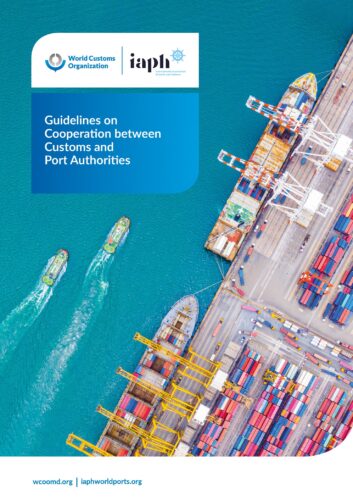
The newly updated version of the Guidelines on Cooperation between Customs and Port Authorities has been co-developed between IAPH members and the member states of the World Customs Organisation (WCO) to strengthen trade facilitation and security, accelerating the digitalization agenda.
This was further updated to incorporate inputs from the World Shipping Council (WSC) to help adopt a common agenda for a solid, sustainable governance structure to exchange “single truth” data and for ports, liner shipping and customs authorities to ensure supply chain security, improve trade facilitation, and help achieve the mutually beneficial goal of a more resilient maritime supply chain.
To download the PDF of this tool in English, click here.
To download the PDF of this tool in French, click here.
To download the PDF of this tool in Spanish, click here.
・Port Call Optimization through data quality
Released by the Supply Chain Resilience Taskforce, namely the International Association of Ports and Harbors (IAPH), in collaboration with chainPORT, the Digital Container Shipping Association (DCSA), the Terminal Industry Committee 4.0 (TIC 4.0), and the International Port Community Systems Association (IPCSA), this study presents essential findings and key insights from various in-depth interviews with port authorities and maritime stakeholders on how they implemented Just-in-Time Arrival best practices. The results are summarised in an implementation checklist, which focuses on enhancing data quality in the context of Port Call Optimisation.
To download a copy of this tool in English, click here.
・IAPH – IHMA Port Call Optimization guide
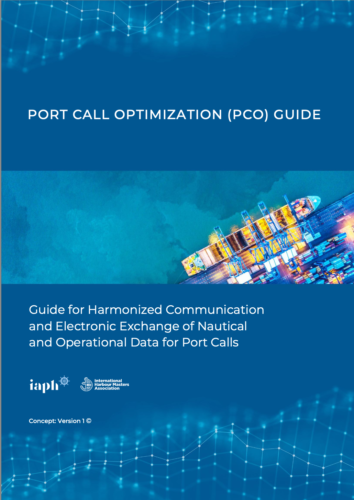
This guide for harmonized communication and electronic exchange of nautical and operational data for port calls has been developed by ports, industry associations, several collaborative port call optimization initiatives as well as the World Bank and Asian Development Bank and is supported by 40 maritime organizations. This guide outlines how ports can join a global network of ports which provide access to a minimum set of port call data through an Application Programming Interface (API) built on universally accepted IMO and IHO standards, ensuring consistency across all ports and ships.
To download a copy of the Port Call Optimization Guide in English, click here.
To download a copy of the Port Call Optimization Guide in Spanish, click here.
・IAPH – World Bank Port Community Systems Report
As the volume of international trade continues to grow, the implementation of the Port Community System in a country has become increasingly vital. This book digs into the complexities of these platforms and examines their roles in shaping the future of international trade and supply chain management. The complete PCS study includes a number of thematic chapters and practical case studies.
To download a copy of this report in English, click here.
For the Spanish version, click here.
・IAPH Cyber Resilience Guidelines for Emerging Technologies
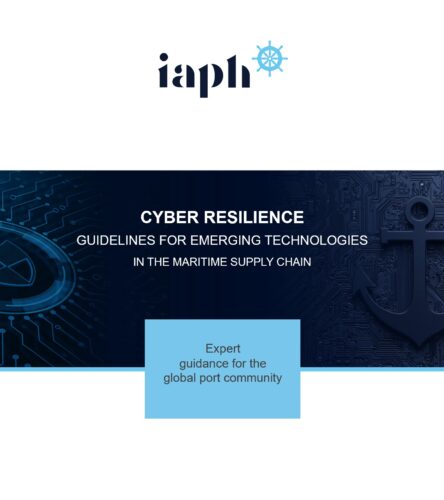
A dedicated IAPH working group operating under the data collaboration committee (DCC) has prepared a new set of cybersecurity guidelines that assess the particular cyber risks associated with the increasing use of emerging technologies in ports. With 28 contributors from IAPH member ports, associate IAPH member experts, the World Bank and World Economic Forum, authors deal with Quantum, AI, Drones, IoT, 5G, Automation and Green Energy in terms of their potential beneficial application to enhance cyber resilience, address risks, and mitigate vulnerabilities.
To download a copy of these guidelines in English, click here.
For the Spanish version, click here.
|
English |
Spanish |
・IAPH Cybersecurity Guidelines for Ports and Port Facilities
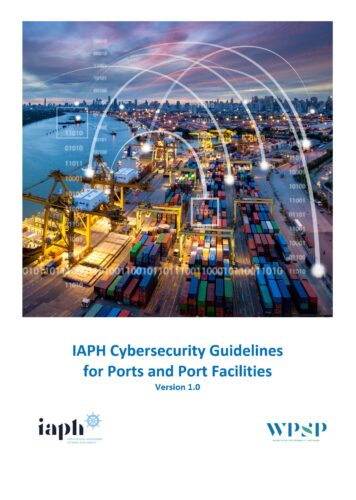
These guidelines, which have been acknowledged and recognised by the International Maritime Organization involved 22 experts from IAPH member ports, Associate Member cybersecurity specialists and the World Bank. It aims to assist ports and port facilities to establish the true financial, commercial & operational impact of a cyber-attack. It also is intended to help ports and port facilities make a practical, objective assessment on their readiness to prevent, stop and recover from a cyber-attack.
The Guidelines, which are aimed for its readibility at CEO and board level, also addresses the challenge of what port organisations require to effectively manage cybersecurity risks.
To download a copy of these guidelines, click here.
・The mindset shift towards innovation
This publication, co-created by expert members from the IAPH Innovation Group, offers ten recommendations to all port leadership teams on how to integrate innovation in practice in their port organisations. There are further details on the ‘how’ in the following sequential, two-page chapters, with a specific case example in each about how one specific member port succeeded in its quest.
To download a copy of this publication, click here.
Risk & Resilience
・IAPH World Bank Closing the Gaps report : key Actions in digitalization, decarbonization and resilience
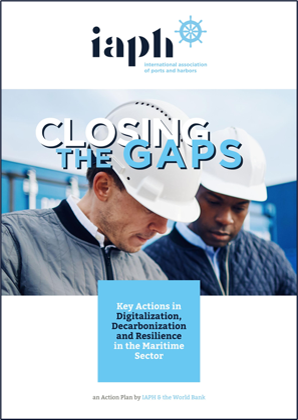
In 2022, IAPH conducted both research with the University of Antwerp and a series of World Bank – IAPH workshops in all six IAPH regions with ports, terminals, shipping lines, BCOs, government and NGOs to identify critical gaps in port physical and digital infrastructure and how to remedy and “close” these gaps, which has resulted in many of the guidelines and tools available in this products section.
To download the report please click here.
・IAPH Risk and Resilience guidelines for ports
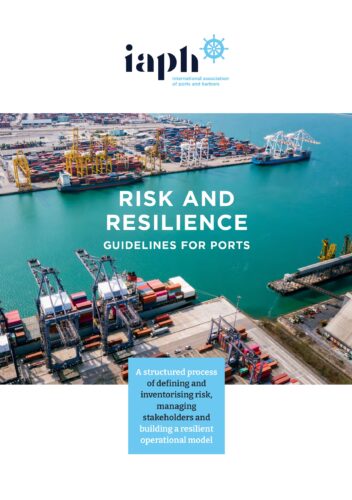
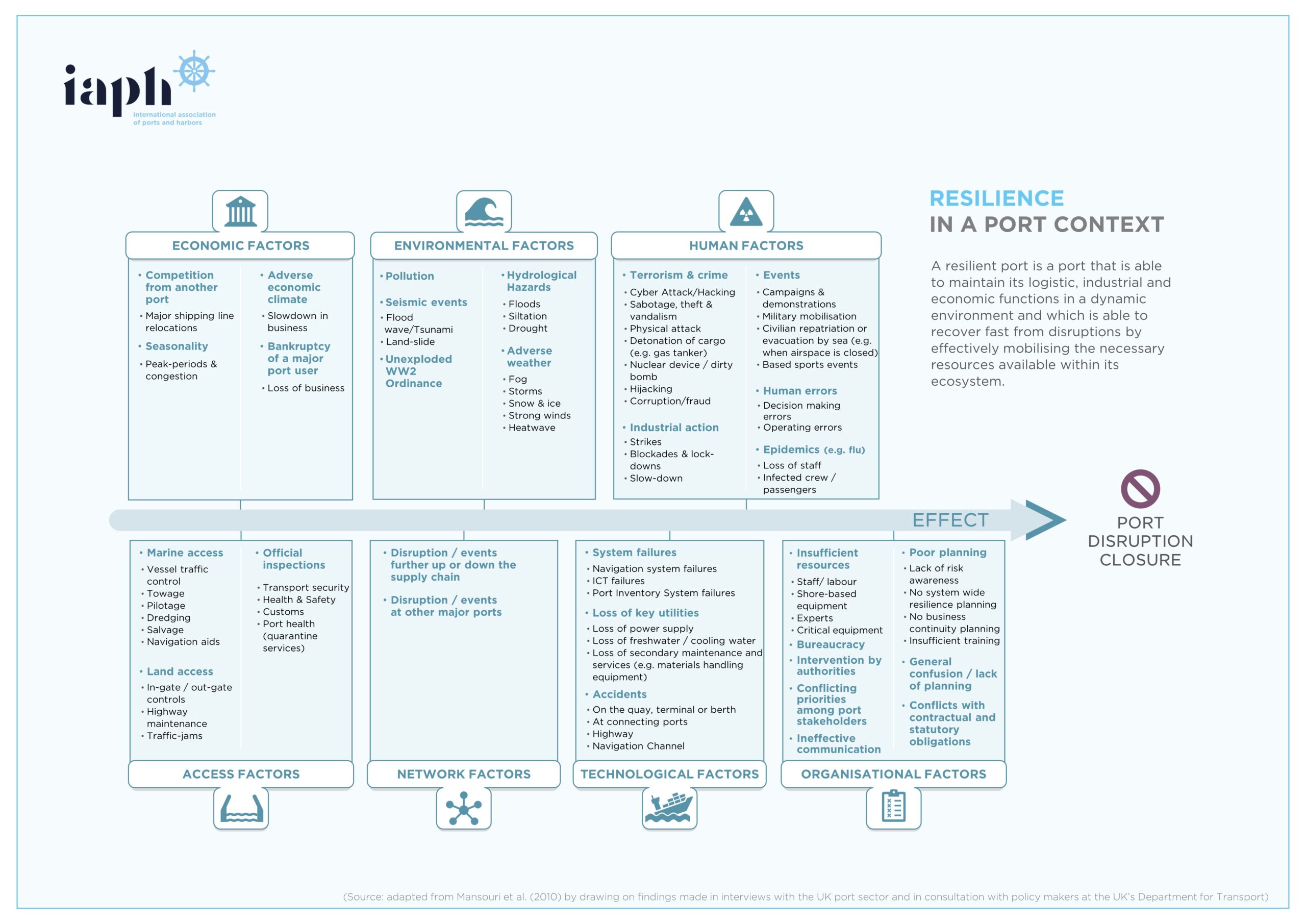
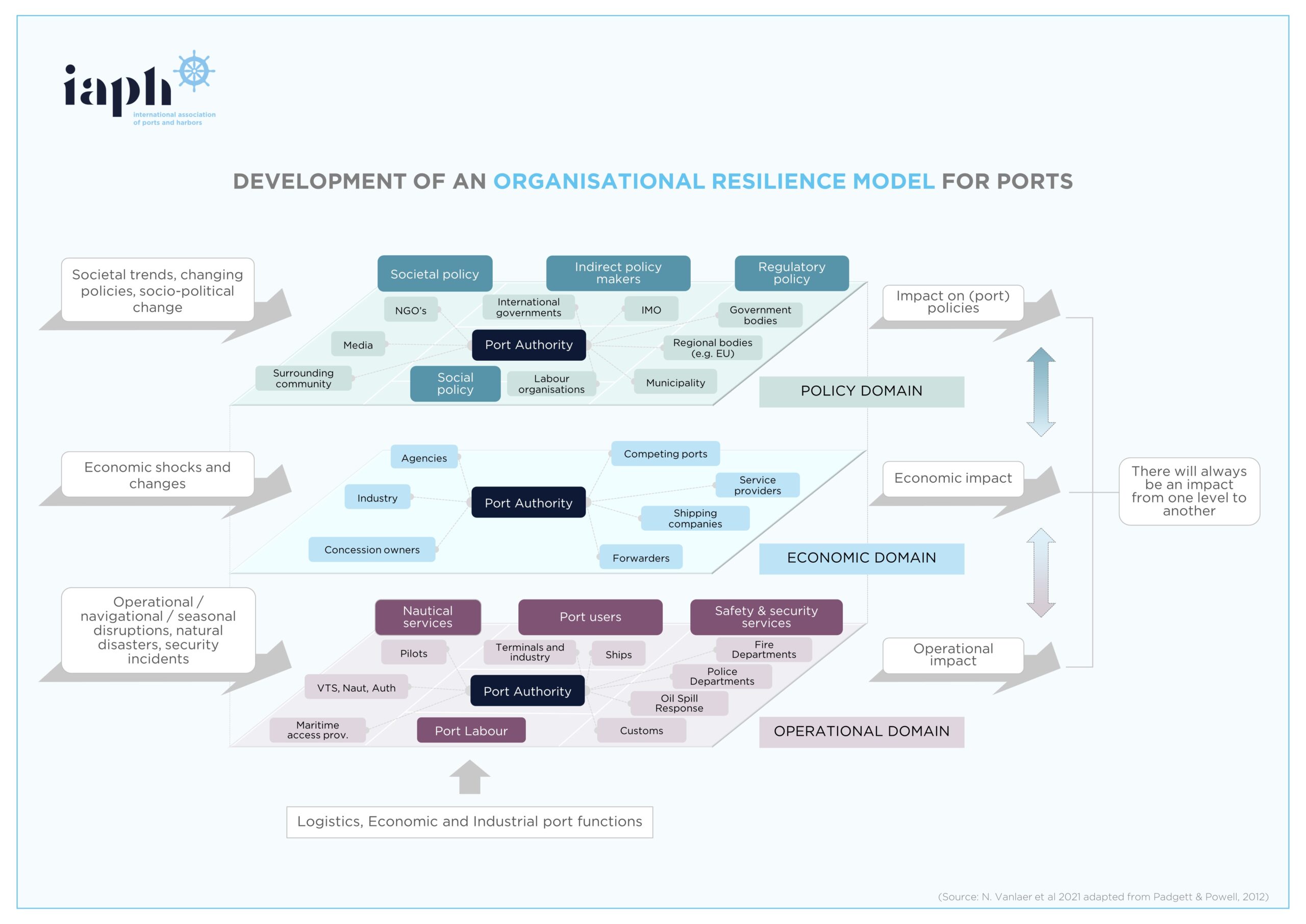
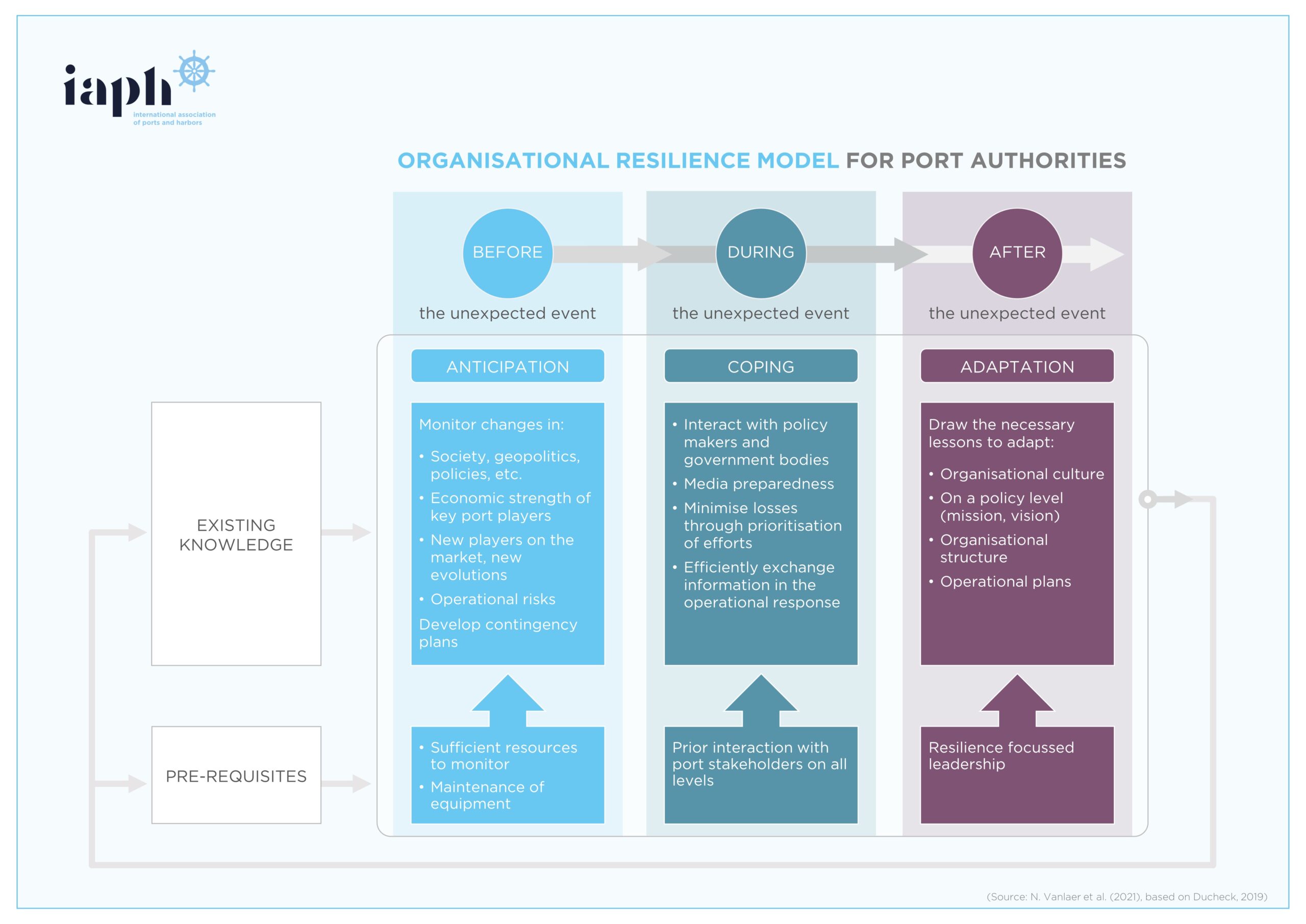
By accurately DEFINING AND INVENTORISING RISK (Section 1 IAPH Risk & Resilience Infographic 1), a port can evaluate its current capabilities and perform a gap analysis in terms of risk preparedness. By correctly identifying and planning how to MANAGE STAKEHOLDERS (Section 2 IAPH Risk & Resilience Infographic 2), a port can evaluate its span of control and influence. By defining resilience in its own context (using Section 3 IAPH Risk & Resilience Infographic 3) a port can evaluate the different baseline elements of resilience required before, during and after an event.
To download a copy of the guidelines in English, click here.
For the Spanish version, click here.
・World Bank Port Reform Toolkit – 3rd edition
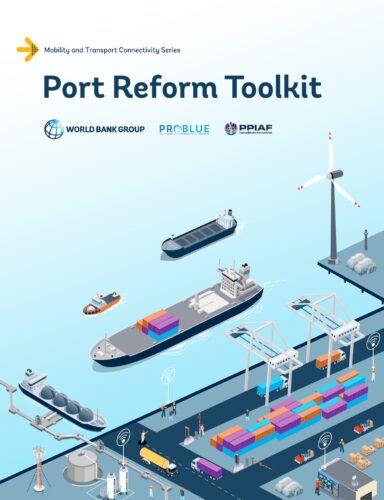
The newly-released Port Reform Toolkit by the World Bank has been comprehensively enhanced to reflect changing global trends and how they impact ports. The first module analyses these trends which shape the subsequent modules. Module 2 introduces concepts of change management. Then, in 8 substantive modules port governance, privatization, regulation, finance, and labour arrangements are covered, followed by new modules that are now at the core of future-proofing ports: digitalization, environmental sustainability, and the port-city interface. IAPH’s Managing Director Dr. Patrick Verhoeven was the lead author on the module on governance.
To download a copy of the toolkit, click here.
・IAPH World Ports Tracker – sustainability and market trends –Summary presentation (2025)
The annual survey results of IAPH’s global member ports have been summarised in graphs by Professors Theo Notteboom and Thanos Pallis of the Association’s Risk and Resilience technical committee covering the six areas of interest of the World Ports Sustainability Program as well as data on market prospects, together with container port productivity and liner connectivity from external sources.
The link can be found here.
・IAPH World Ports Tracker – sustainability and market trends – Full report (2025,2026)
The survey results of IAPH’s most-engaged ports from around the world have been analysed in the latest, upgraded version of the IAPH World Ports Tracker written by Professors Theo Notteboom and Thanos Pallis of the Association’s Risk and Resilience technical committee. The regular port members were questioned on all six areas of interest of the World Ports Sustainability Program as well as collecting their views on market prospects, gathering additional data on container port productivity and liner connectivity from external sources.
IAPH members: Free Please click here.
2026 edition: IAPH non-members: Price EUR 500.00 Please click here for the IAPH online store.
2025 edition: IAPH non-members: Price EUR 500.00 Please click here for the IAPH online store.